
What is a voice-over, and where is it used?
A voice-over is the voice you hear without seeing the speaker on screen. Its delivery changes a lot with the format, so choosing a voice starts with knowing where it will be heard: TV and radio ads: short, with every second paid for, so the read has to land the message the first time. Social media ads: viewers may hear two seconds before scrolling, so the first line is the whole ad. Explainers and motion graphics: a clear, calm voice that leads the viewer step by step; pace matters more than energy. Corporate films: a confident tone that does not oversell. Documentaries: a voice that tells the story and leaves room for the picture. E-learning: hours of explanation need a voice that does not tire the ear. Phone systems: short lines and very clear pronunciation. One note from practice: a voice that works in a documentary can fail in a 15-second ad, and the other way round. So do not choose from the "nicest demo" in the reel; choose the sample closest to your kind of content.When is an AI voice enough?
There are uses where a generated voice does the job reasonably well: a scratch version of an ad for management to approve before the real recording, internal training videos, long walkthroughs that change every month, and test versions of several scripts for paid ads before you commit to one. In these cases speed matters more than performance, and few people will notice the difference. There is one more smart use: writing the script and trying it with a generated voice to time it before booking the studio. It shows early that the script is longer than the ad, and saves editing time during the session.When does a generated voice cost the ad?
When the feeling is the message. A Ramadan ad, a national song, a story with a climax. A human performer knows where to pause a second before the key line and where the voice should smile. Current tools read the line correctly but rarely perform it. When the audience is Egyptian and the script is in dialect. Natural Egyptian pronunciation, place names and a joke landing on time are the first things a generated voice stumbles on. One mispronounced brand name is enough to turn the comments into a joke about your ad. When you want a consistent brand voice. Brands that use one voice for years build recognition. A voice available to every user of the same tool may turn up tomorrow in a competitor's ad. When the ad runs on TV or in a big campaign. Usage rights matter here: read the tool's commercial terms carefully, and never use a voice that imitates a real person without their written consent.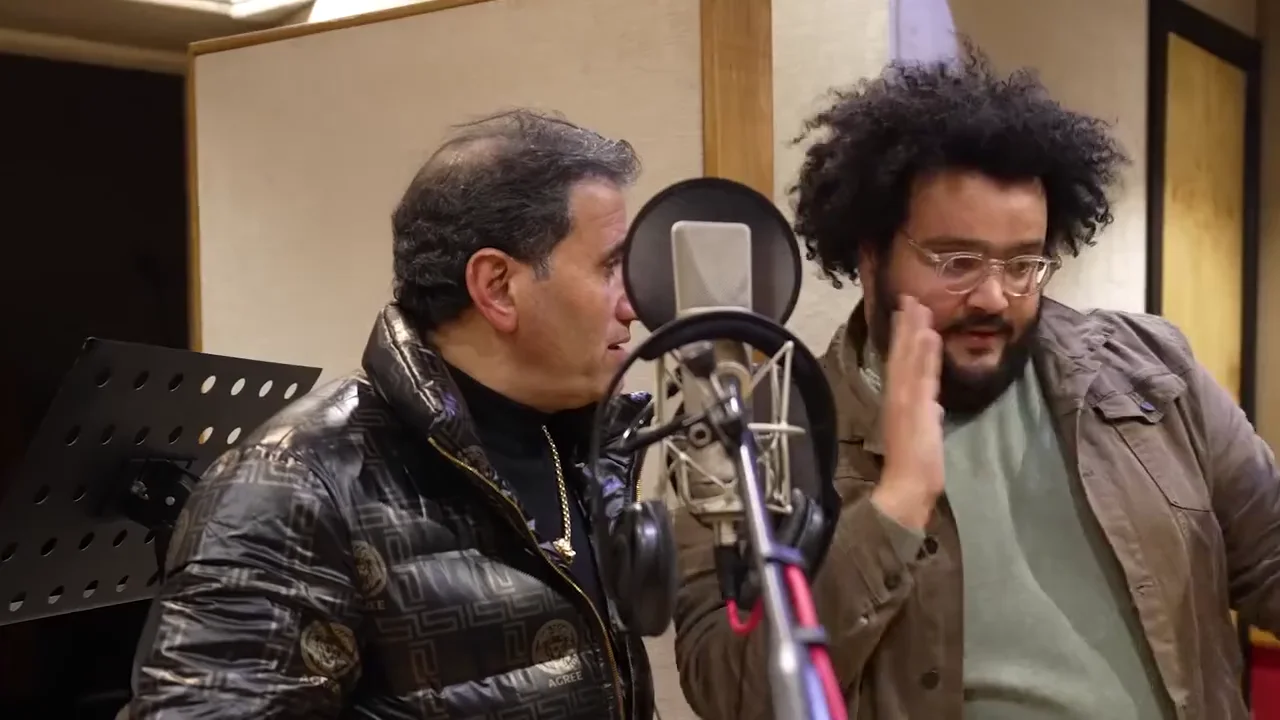
Human voice vs AI voice at a glance
| Criterion | Human voice | AI voice |
|---|---|---|
| Feeling and delivery | Performs the line, controls pauses and emphasis | Reads the line correctly, with a predictable delivery |
| Egyptian and Gulf dialects | Natural when the artist is a native speaker | Stumbles on colloquial pronunciation and rhythm |
| Names and brands | Corrected on the spot during the session | Needs retries and spelling tricks |
| Speed | One to two days with editing | Minutes |
| Changing a line after delivery | Needs a short new session | Instant |
| Uniqueness | A voice that can become yours | Available to any competitor |
| Rights | Set in a clear contract with the artist | Set by the tool's terms, which can change |
Which dialect suits your ad?
Choosing a dialect is a marketing decision before it is a sound decision. Egyptian colloquial is closest to Egyptian audiences for social ads and everyday products, and builds familiarity fast. Modern Standard Arabic suits official bodies, documentaries and ads aimed at several Arab countries at once. Gulf dialects are essential if your audience is in Saudi Arabia, the UAE or Kuwait, and must be voiced by a native speaker; Gulf listeners spot an imitated accent from the first word. If a campaign runs in two markets, record two versions in two dialects rather than one "neutral" version that fits neither.How to choose the right voice for your brand
Start with three words that describe your brand's personality. Friendly or formal? Young or expert? Calm or energetic? Then choose the voice that matches those words, not the one you personally like. Ask about the age the voice sounds, not the age of the person; some voices sound ten years younger or older than their owners. When you ask for samples, send a short brief: the product and audience, where the ad will run, three words for the tone, one or two reference ads you like, a list of names and difficult words with their pronunciation, and the length. That brief cuts voice selection from a week of emails to a single day.Write the script for the ear, not the eye
A script that reads well on paper does not always sound good. These are rules we apply to every script before recording:- One short sentence per idea; a long sentence loses the listener before it ends.
- Write numbers and prices the way they are spoken, not as figures and currency codes.
- Put a pronunciation guide next to the brand name and foreign words.
- Add vowel marks to Arabic words whose meaning changes with the vowels.
- Avoid runs of similar-sounding words; they trip the tongue and show in the recording.
- Read the script aloud with a stopwatch before sending it.
- Leave two seconds at the end for the logo and music.
How many words fit in a 30-second ad?
This is the most common mistake in the scripts we receive: a script written for a minute that has to be read in 30 seconds. The table below is a practical estimate at a comfortable, unhurried pace:| Ad length | Arabic words (approx.) | English words (approx.) | Typical use |
|---|---|---|---|
| 6 seconds | 12 to 15 | 13 to 16 | Non-skippable YouTube bumpers |
| 15 seconds | 28 to 35 | 35 to 40 | Stories, TikTok and Instagram ads |
| 30 seconds | 55 to 70 | 70 to 80 | TV spots and the main campaign ad |
| 60 seconds | 120 to 140 | 140 to 160 | Explainers and long radio spots |
Your brand's sound identity
A sound identity is wider than one voice: it is the recurring voice, the short tone that plays with the logo, the jingle, and the kind of music your audience knows before seeing the picture. We wrote, composed and recorded a song for the zed's ad before it aired, so it became part of the campaign rather than a background to it. A brand that uses the same elements in every ad is recognised within two seconds, even when the phone is in the listener's pocket.Remote recording or a studio?
Many voice artists now record from treated rooms at home, which is fine if the room is acoustically treated and the microphone is good. The problem appears when combining takes: a line recorded in one room and another in a different room don't match in reverb and character, and listeners hear the difference without knowing why. So we prefer recording a whole ad in one place, and when remote recording is necessary we send the artist clear recording specs and run a short test before the session.When does a brand need a podcast?
A podcast is not a long ad; it is content that builds trust over time. It suits brands with expertise worth telling: a real estate company explaining the market, a clinic answering patients' questions, or an organisation hosting influential guests, as in the Al Rehla podcast we produced on video and audio. If you decide to start, committing to a regular number of episodes matters more than a dazzling first episode followed by silence.
Common pronunciation mistakes in Arabic ads
Foreign brand names: a name like zed's or an English product name can be said several ways, so agree on one, write it phonetically in Arabic in the script, and keep it in every ad. Numbers: "15%" is read differently in Egyptian colloquial and in MSA, so write it the way you want it heard. The letters qaf and jim: they differ between Egyptian colloquial, MSA and Gulf dialects, and must stay consistent within the same ad. Loanwords: "application" or the Arabic word for app? "online" or its Arabic equivalent? Choose what your audience actually says. Before recording, read the script to someone from your target audience and ask: is there a word nobody says this way? One note like that saves a full re-record.Cut-downs aren't cut, they're written
The common mistake is cutting a 30-second ad to 15 seconds by deleting half of it. The result is usually a broken sentence with no clear start. The right way is to write the short version as its own script: one idea from the original ad, the brand name, the promise and the tagline. The 6-second version carries a single line and the brand name. All three are recorded in the same session with the same delivery, so the whole campaign sounds like one voice.A checklist before booking a voice-over session
- The script is final, approved by the decision-maker, and timed to the ad length with a stopwatch.
- A pronunciation guide for the brand name, foreign words and numbers.
- The voice is chosen from samples read from your own script.
- The dialect is set, and the artist is a native speaker of it.
- The cut-downs are written as separate scripts.
- Media and rights term are written into the contract.
- One person on your side directs the session.
- The music is licensed, or it is agreed who will provide it.
What sets the price of a voice-over?
People often ask "how much per minute?", but length is not the only factor. The price depends on five things: the length of the script, the voice artist and their experience, where it will be used (online only, TV, or both), how long and in which countries it will be used, and how many versions you need. The same voice for a one-month Facebook ad costs differently from a year-long TV campaign in several countries. Studio time, editing and mixing come on top. A money-saving tip: price the cut-downs (15 and 6 seconds) together with the main ad in the same session; recording them later in a separate session costs more.Rights: what the contract should say
A verbal agreement to "record an ad" is not enough. A clear contract sets out: the media (online, TV, radio, outdoor screens), the term (a year, for example, or unlimited), the territory, the number of revision rounds included, and who owns the final files. Many voice artists now also add a clause that forbids using their recordings to train AI tools or clone their voice, which is a sensible clause that protects both sides. If you use an AI tool, read the commercial licence of the plan you are on; some free plans do not allow use in paid ads or broadcast.How a voice-over session runs
1. Final script first. Do not walk into the studio with an "almost final" script; every change during the session uses paid time. 2. Choosing the voice. We send samples of two or three voices that fit the ad, and you choose before recording day. 3. Recording with direction. The artist reads the script several times with different deliveries: calmer, faster, with emphasis on a different word. You can attend or follow remotely and direct the read live. 4. Safety takes. We record key lines and the brand name more than once, and sometimes an alternative version of a line that may change after management sees the ad. That can save a whole session later. 5. Edit and mix. Cleaning, picking the best take for each line, then setting the level to the platform's standard.
What you should receive at the end
Always ask for: the dry voice without music as a WAV file at 48 kHz and 24-bit, a mixed version with music, the cut-down versions, and levels set for where it will play, around -14 LUFS for YouTube, or the channel's standard for TV. Having the dry voice lets you reuse it later with other music or in a new version of the ad.Common mistakes that cost time and money
- A script longer than the ad, then trying to "squeeze" it with a fast read.
- Choosing the voice by an office vote instead of by the audience.
- Notes arriving from several people after the recording.
- Forgetting the cut-downs until the paid-ads team asks for them.
- Not defining usage rights, then finding the ad needs a TV run nobody agreed on.
- Unlicensed music under a licensed voice.
Example: a 30-second script and how it was written
This is a sample script for a made-up restaurant, written to show the rules above, not for a real client:- "One o'clock. The meeting still hasn't ended." (opens a situation the viewer recognises in two seconds)
- "And you know lunch will be a sandwich at your desk... for the fifth time this week." (the pause before "for the fifth time" is written in so the artist reads it)
- "Order from Sofra, and home cooking reaches you hot in half an hour." (the brand name sits mid-ad, not only at the end)
- "Half an hour. No more." (repeating the promise in two short lines fixes it in memory)
- "Sofra. Home food, at work." (the line for the last two seconds, with the music)
The right voice for each platform
| Platform | Usual length | Tone | Practical note |
|---|---|---|---|
| TikTok and Instagram Reels | 9 to 20 seconds | Close and quick, like talking | The first two seconds decide everything |
| YouTube ads | 6, 15 or 30 seconds | Clear and direct | Many watch muted at first, so add on-screen text |
| TV | 30 or 60 seconds | Fuller, more performed | Follow the channel's technical loudness spec |
| Radio | 30 or 60 seconds | The voice is the only picture | Say the brand name at least twice |
| Website explainer | 60 to 90 seconds | Calm and organised | A slightly slower pace helps understanding |
Music and sound effects around the voice
A good voice can get lost under loud music. In the mix, the music dips automatically whenever the artist speaks and comes back up in the gaps, which keeps speech clear without losing the music. Simple sound effects, a phone notification or a door opening, add realism when used sparingly. The part that matters most is licensing: music you hear online is not free for ads. Use a library licensed for commercial use, or music composed for your brand, and keep proof of the licence with the ad files.How to judge a voice demo before booking
The demos voice artists send are usually their best, carefully processed work. So ask for a short read of your own script, even two lines; it shows how they say your brand name and whether their voice fits your tone. And listen on a phone speaker, not studio monitors; that is how most of your audience will hear it.How to direct a voice artist in the session
Good direction describes the feeling, not the technique. Instead of "read it slower", say "as if you are telling a friend what happened to you today". Instead of "stronger", say "as if you are completely sure of this". Ask for two or three different reads of the key line, and choose after the edit, not during the recording; the ear judges better when it hears the line inside the whole ad. Name one person from the client side to direct the artist. Several opinions in the session confuse the artist and stretch the time without improving the result.Voice-over FAQ
Is voice-over the same as narration?
Yes. Voice-over is the voice you hear without seeing the speaker on screen, whether it narrates a film or sells a product in an ad.Can an AI voice be used in a TV commercial?
Technically yes, as long as the tool's licence allows commercial and broadcast use. But test the result with people from your audience first; what sounds fine on laptop speakers can sound robotic on a TV.How long does it take to record a 30-second ad?
The recording itself usually takes under an hour if the script is final and the voice chosen in advance, then roughly a working day for editing, mixing and delivery.Are free voice-over sites good enough for ads?
For tests and drafts, yes. For an ad published under your brand, check the commercial terms first, and remember that the same voice is available to everyone else.Can an ad be recorded in a Gulf dialect?
Yes, as long as the voice artist is a native speaker of that dialect. Gulf audiences notice an imitated accent immediately, and it weakens trust in the whole ad.Can we keep the same voice for years?
Yes, and many brands do exactly that to build a sound identity. Agree it with the artist from the start, and set the term and renewal in the contract.Do you write the script too?
Yes. We write and time the script to the ad length, or review yours and tell you what to cut before recording.How long do voice-over usage rights usually last?
One year is common for paid ads, with the option to renew, or perpetual rights for internal content and explainers. Set the term in the contract before recording, not after.What if management changes a line after recording?
The new line is recorded in a short session with the same artist and mixed into the ad the same way. That is why we record safety versions of lines likely to change from the start.Do you produce video podcasts?
Yes. We design the podcast set, film it with several cameras and record the sound in the studio, then edit the full episode and cut short clips for social media.Can I use my own voice, or our CEO's, in the ad?
It is possible, and it can work for personal messages such as a founder's note. But it needs a short studio test first and more direction than a professional artist, and it is harder to repeat with the same delivery in every campaign.Can more than one language be recorded in the same session?
If the artist is fluent in both with native pronunciation, yes. More often each language is voiced by a native speaker, keeping the same tone and pace so both versions feel like one campaign.EPH's production team in Cairo: commercials, events, photo and sound studios. We write here about what we learn on set.


 Shineray X30 — On set
 zed's — Making of the commercial
 Red Bull — Behind the scenes
 Republican People's Party — Iftar build
 Golden Beach Resort — Behind the scenes
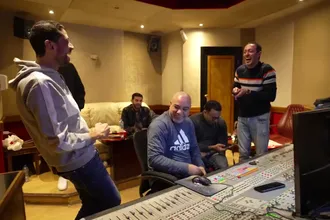 zed's — Recording the ad song
 Shineray — Five locations in one day
 Republican People's Party — Sports final build
 Conference night — The build
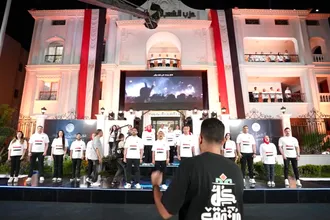 Republican People's Party — Making of the song
 ECSSR — At the stand
 Shineray — Studio setup
 Startup Power — Summit build
 Social media — Studio shoot at EPH
 Republican People's Party — Hurghada Forum
 Wadi Degla — Fashion session